Ending Harmful Practices: Legal Aid Clinics Bring Justice Closer to Communities

Legal Aid Clinics Bring Justice Closer to Communities
In Amudat and Nakapiripirit districts, deep-rooted harmful cultural practices continue to negatively affect adolescent girls, women, and communities at large. Incidences of sexual and gender-based violence (SGBV), female genital mutilation (FGM), child marriage, and teenage pregnancy remain prevalent, limiting the ability of girls and women to thrive and fully exercise their rights.
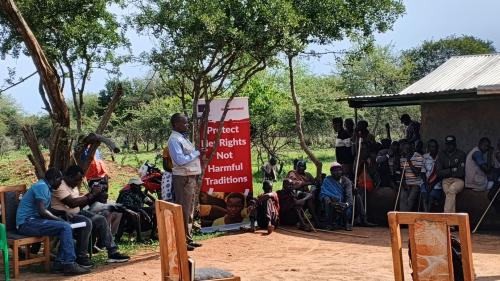
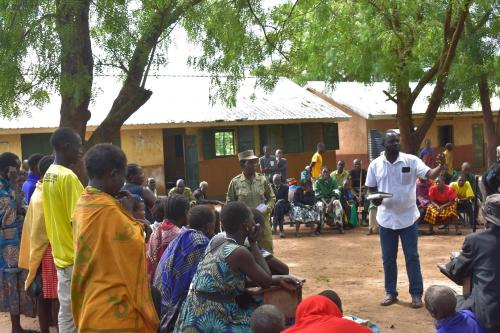
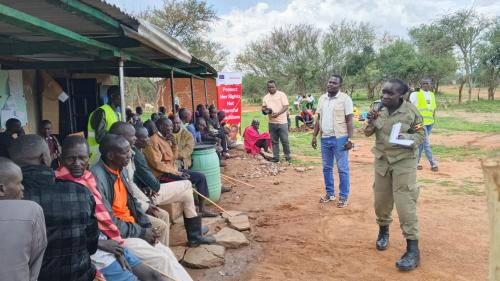
To address these challenges, ActionAid International Uganda, with funding from the European Union, organized a four-day Legal Aid Clinic in Amudat and Nakapiripirit districts. The activity was implemented in close collaboration with district Community Development Departments, District Health Teams, the Child and Family Protection Unit of the Uganda Police, and the Uganda Law Society. The clinics aimed to increase community awareness of legal provisions against harmful practices, their health implications, and the consequences of violating the law.
The legal sessions were conducted in Tokora and Nakapiripirit Town Council in Nakapiripirit District, and in Abiliyep and Amudat Sub-County in Amudat District, reaching a total of 675 participants (271 males and 404 females). Among these were 60 religious and cultural leaders, 50 duty bearers, and 95 adolescent girls aged 10–19 years.
A key achievement of the clinics was the provision of on-the-spot legal advice and counselling to 21 individuals through a GBV desk established by the Uganda Law Society. Participants gained increased awareness and understanding of legal frameworks addressing FGM, SGBV, teenage pregnancy, and child protection, as well as available referral pathways for survivors.
Community members were also engaged in awareness sessions on the forms and dangers of violence against women and girls, with emphasis on legal implications and the importance of collective responsibility in prevention. The engagement created strong dialogue between community members, local leaders, and service providers, strengthening trust and accountability mechanisms.
The community expressed appreciation for the intervention and committed to strengthening efforts to end harmful practices. Religious and cultural leaders in particular pledged to support continued awareness creation and promote positive social norms. One religious leader reflected:
“We have had good engagement, and we have realized the negative consequences of harmful practices. I have also noticed that we have been treating our partners without respect and denying them economic opportunities due to lack of knowledge. I appeal that we spread this message to the rest of our community members and support women economically to create lasting impact in our households.”
Similarly, a local leader from Abiliyep Sub-County noted that since the implementation of ActionAid’s interventions, cases of FGM have significantly reduced, with remaining cases often identified through health service providers during deliveries highlighting progress in community monitoring and behavioural change. The Legal Aid Clinics reinforced the importance of multi-stakeholder collaboration in addressing harmful practices and promoting justice, protection, and human rights at community level.