HER VOICE, HER POWER: IGNITING FEMINIST LEADERSHIP IN AMUDAT AND NAKAPIRIPIRIT DISTRICTS.

IGNITING FEMINIST LEADERSHIP IN AMUDAT AND NAKAPIRIPIRIT DISTRICTS.
Adolescents and young people in the Karamoja region continue to face disproportionate challenges related to Sexual and Gender-Based Violence (SGBV) and Sexual and Reproductive Health (SRH). Deep-rooted cultural norms, patriarchy, and limited access to affordable and quality health services have restricted their ability to make informed decisions about their lives and futures. Empowering adolescent girls and teenage mothers with feminist leadership skills and a human rights-based approach (HRBA) is therefore critical to advancing gender equality and driving sustainable change.
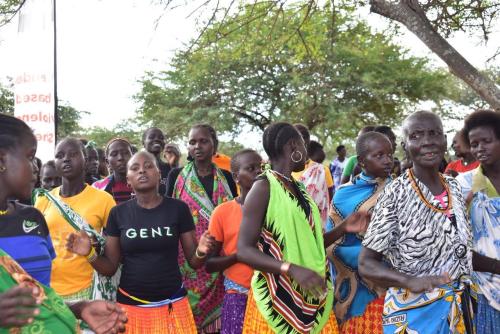
In response to these challenges, ActionAid International Uganda (AAIU), with funding from the European Union, conducted Feminist Interface Talks across 11 sub-counties six in Amudat District and five in Nakapiripirit District from 18th to 23rd May 2026. The initiative reached a total of 431 adolescent girls and teenage mothers, creating safe and inclusive spaces for dialogue, reflection, and learning.
The talks aimed to equip participants aged 10–19 years with the knowledge, skills, and confidence to become transformative leaders capable of challenging harmful gender norms, advocating for their rights, and promoting social justice within their communities. Through interactive discussions, peer learning, and experience sharing, participants explored key issues including sexual and reproductive health rights, self-care, menstrual hygiene, antenatal care, and strategies for preventing and responding to SGBV.
A defining feature of the sessions was the use of role model women who shared their lived experiences to inspire and mentor participants. Their stories resonated deeply, offering both reflection and hope. Christine from Kongorok shared her experience, noting that if she had the opportunity to relive her life, she would make different choices, having been forced into early marriage at a young age with limited opportunity to pursue education. She encouraged the girls to stay in school and advised young mothers to engage in small businesses as a pathway to empowerment and independence.
These powerful testimonies sparked meaningful conversations and inspired many participants to reimagine their futures. Esther from Lemsui Sub-County reflected on her personal transformation, expressing a renewed sense of determination and belief in her ability to shape her destiny despite life’s challenges.
As a result of the Feminist Interface Talks, adolescent girls and teenage mothers were motivated to initiate small businesses and savings practices to support themselves and their families. They gained practical knowledge on sexual and reproductive health and rights, including self-care and maternal health, and committed to ensuring their children access education while challenging discriminatory practices that limit girls’ opportunities. Participants were also equipped with feminist leadership skills and encouraged to take action through peer education, community dialogues, and advocacy to address SGBV and SRH challenges in their communities.
The use of pictorial life stories proved to be a particularly effective approach in communicating complex and sensitive issues such as female genital mutilation and teenage pregnancy, as participants could easily relate these stories to their own lived realities. Additionally, the use of local language alongside open discussions and experience sharing enhanced understanding, participation, and ownership of the learning process.
Moving forward, there is a strong need to scale up Feminist Interface Talks to reach more adolescents across the Karamoja region, while strengthening follow-up mechanisms to track progress and support sustained change among participants. Empowering adolescent girls to cascade knowledge and initiatives to their peers will further amplify impact and contribute to building resilient, informed, and empowered communities.
The Feminist Interface Talks have shown that when adolescent girls are given the opportunity, space, and support to learn and lead, they can challenge harmful norms, inspire change, and take charge of their futures. In Karamoja, their voices are rising and they are ready to lead.