From Trash to Transformation: Busiki Communities Create Wealth Through Climate-Smart Action in Namutumba

Busiki Communities Create Wealth Through Climate-Smart Action in Namutumba
In Busiki, Namutumba District, waste is no longer just waste it is becoming a source of hope, food, and income. In a powerful response to rising environmental degradation, plastic pollution, and household food insecurity, ActionAid International Uganda (AAIU), through the Busiki Local Rights Programme (LRP), is helping communities reimagine and repurpose what they once discarded. At the heart of this transformation is a practical, community-led environmental conservation initiative that is turning everyday waste into valuable resources.
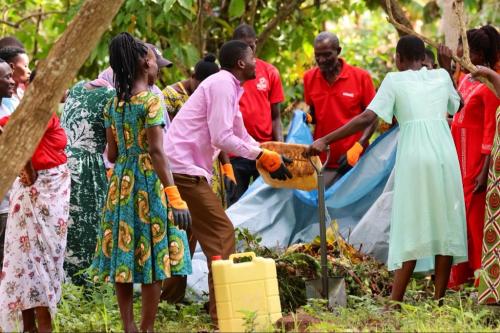
A total of 109 community members from Nsinze, Kibaale, and Ivukula sub-counties participated in a three-day hands-on campaign on sustainable waste management, recycling, composting, and kitchen gardening. The training brought together women, youth, smallholder farmers, informal waste collectors, community leaders, and local government representatives united by a common vision of cleaner, healthier, and more resilient communities.
For years, poor waste disposal practices such as open dumping and burning of plastics have posed serious threats to public health, polluted water sources, and contributed to flooding and disease outbreaks. At the same time, many households continue to face food insecurity due to rising living costs and limited access to productive land. The intervention therefore focused on simple, low-cost, and immediately applicable solutions.
Participants were trained in waste segregation, compost manure production from organic waste, plastic recycling, and the establishment of kitchen gardens using sacks, containers, and small backyard spaces. The sessions were highly practical, with participants actively engaging in compost preparation and planting vegetables such as sukuma wiki, onions, tomatoes, and eggplants using locally produced compost.
A defining moment of the training was the shift in mindset from “waste thinking” to “resource thinking.” Facilitators emphasized that much of what is discarded daily still holds significant value when properly harnessed. As one facilitator noted:
“Most of the materials needed for composting and kitchen gardening are already available within our communities. When properly used, they improve soil fertility and strengthen household food security.”
The campaign also deepened community awareness of the environmental risks linked to plastic pollution and poor waste disposal, encouraging households to embrace reduce, reuse, and recycle practices.
Community demonstration gardens exhibited how to use compost derived from household waste offering a practical demonstration of how environmental protection and food production can reinforce each other. Women and youth have been especially active, drawn by the affordability, simplicity, and income-generating potential of the practices.
Beyond food production, the initiative has also sparked new economic thinking. Youth and women groups are increasingly exploring recycling as a livelihood opportunity, including the production of reusable and eco-friendly products. At household level, communities have committed to consistently applying the reduce, reuse, and recycle approach to curb plastic pollution.
Local leaders have welcomed the initiative, noting that sustained awareness and collective responsibility are essential for long-term environmental protection and improved household wellbeing.
Through local structures follow-up visits will be made to support households and groups in scaling up waste segregation, composting, and kitchen gardening, while providing ongoing mentorship to ensure sustainability and lasting impact.